
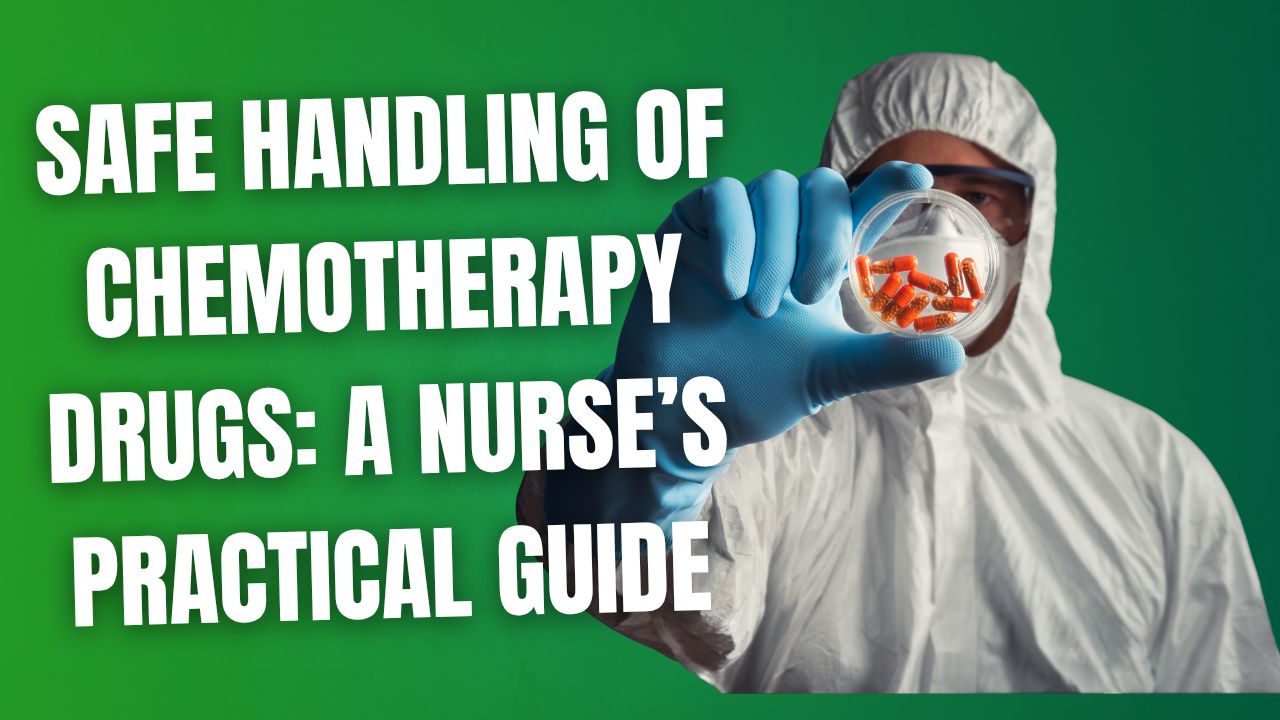
Safe Handling of Chemotherapy Drugs: A Nurse’s Practical Guide
Meta Description:
Safe handling of chemotherapy drugs is vital in nursing practice. Learn step-by-step protocols, safety precautions, and patient education tips to protect both patients and healthcare staff.
—Introduction

– Why Chemotherapy Safety Matters
Chemotherapy drugs are among the most powerful and life-saving medications in modern medicine. They help fight cancer, shrink tumors, and improve survival rates. However, they also pose significant risks to patients, nurses, and caregivers if not handled properly.
Unlike standard medications, chemotherapy drugs are cytotoxic—meaning they can damage healthy cells as well as cancer cells. Even a small mistake in dosage, preparation, or administration can cause severe harm. For nurses, who are at the frontline of cancer care, strict adherence to chemotherapy handling protocols is non-negotiable.
This guide will give you a step-by-step approach to safely handling chemotherapy drugs, covering everything from preparation to administration, disposal, and patient education.

—What Makes Chemotherapy Drugs High-Risk?
Chemotherapy medications fall into the high-alert drug category, as classified by organizations like the Institute for Safe Medication Practices (ISMP) and the World Health Organization (WHO).
Key risks include:
Toxicity to healthy cells → skin irritation, organ damage if spilled or misused
Narrow therapeutic index → small errors can have major consequences
Risk of occupational exposure → nurses may be exposed via skin contact, inhalation, or accidental needle sticks
Delayed side effects → long-term exposure can increase cancer risk in healthcare staff
👉 Because of these risks, nurses must follow strict safety protocols to protect both themselves and their patients
.—Nursing Responsibilities in Chemotherapy Drug Handling
Nurses play a vital role in ensuring chemotherapy safety. Their responsibilities include:
a) Verifying chemotherapy orders with another qualified nurse or pharmacist
b) Preparing drugs under controlled, sterile environments
c) Using personal protective equipment (PPE) at all times
d) Educating patients and caregivers on precautions
e) Safely disposing of chemotherapy waste
f) Monitoring for adverse drug reactions

—Step-by-Step Nursing Protocols for Safe Handling of Chemotherapy Drugs
1. Preparation Stage Always prepare chemotherapy drugs in a biological safety cabinet (BSC) or laminar airflow hood.
Wear full PPE: double chemotherapy-tested gloves, impermeable gown, protective goggles/face shield, and N95 mask if aerosols may be generated.
Check drug labels carefully for dose, concentration, and patient name.
Avoid eating, drinking, or applying cosmetics in preparation areas.
2. Transportation of Chemotherapy Drugs
Use sealed, leak-proof containers for transporting drugs from pharmacy to ward.
Label containers clearly with “Cytotoxic – Handle with Care” signs.Never carry chemotherapy drugs in open trays or by hand.
3. Administration Protocols
Confirm patient identity using two identifiers (name, ID band, date of birth).
Double-check medication with another nurse before administration
.Use closed-system transfer devices (CSTDs) whenever available to prevent leaks and aerosols.
Administer slowly and monitor patient’s vital signs.
In case of IV administration, ensure correct vein access to prevent extravasation (drug leakage into surrounding tissue).
4. Post-Administration Care
Dispose of all used syringes, IV tubing, gloves, and gowns in designated cytotoxic
waste containers.Wash hands thoroughly after drug handling.
Document drug administration details, patient response, and any adverse events.
—Safety Precautions for Nurses
Never recap needles after use.
Report and document any spills or exposure immediately.
Follow spill management protocols:
Evacuate area Use a chemotherapy spill kit
Wear PPE before cleaning Participate in regular chemotherapy safety training programs.

—Educating Patients and Families
Nurses must also guide patients and their families to handle chemotherapy safely at home:
Advise patients to flush toilets twice after use (chemo metabolites are excreted in urine/stool).
Family caregivers should wear gloves when handling body fluids or laundry.
Encourage patients to report severe nausea, vomiting, mouth sores, or signs of infection immediately.
Stress the importance of taking medications exactly as prescribed—no skipped or extra doses.-
—Common Errors in Chemotherapy Handling – And How to Avoid Them
Mistaking drug names (look-alike, sound-alike medications) → Always use tall-man lettering (e.g., vinCRIStine vs. vinBLAStine).
Incorrect dosage calculations → Always double-check with another nurse or pharmacist.
Extravasation during IV administration → Monitor infusion site continuously,
educate patients to report burning sensation.Improper disposal → Never discard chemo waste in regular bins.
—FAQs on Chemotherapy Drug Handling
1. Why do nurses need double gloves for chemotherapy?
Because cytotoxic drugs can pass through single gloves over time, double gloves provide extra protection.
2. What should I do if chemotherapy spills on my skin?
Wash the area immediately with soap and water, remove contaminated clothing, and report the incident.
3. Can pregnant nurses administer chemotherapy?
Generally, pregnant or breastfeeding nurses should avoid handling chemotherapy due to risks of fetal harm.
4. What’s the role of closed-system transfer devices (CSTDs)?
They prevent drug leakage and exposure during preparation and administration, making chemotherapy safer.
5. How long should chemotherapy precautions be maintained at home?
For at least 48 hours after treatment, as chemotherapy drugs are still excreted in body fluids.
6. What PPE is essential for chemo handling?
At minimum: chemotherapy-tested double gloves, impermeable gown, and protective eyewear.
—Conclusion
– Empowering Nurses for Chemotherapy Safety Chemotherapy drug administration is one of the most sensitive nursing responsibilities. It demands precision, vigilance, and strict adherence to safety protocols. By following preparation, administration, and disposal guidelines, nurses not only protect their patients but also safeguard themselves and their colleagues from occupational hazards.