
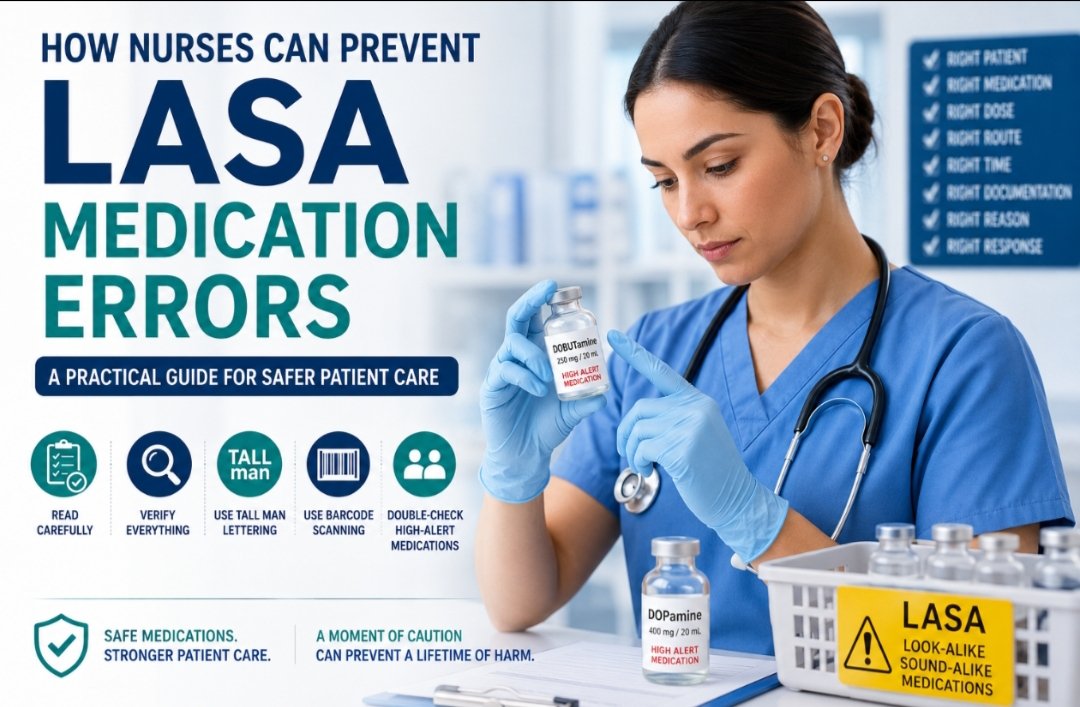
How Nurses Can Prevent LASA Medication Errors: A Practical Guide
Meta descriptions
Discover effective ways to reduce Look-Alike Sound-Alike medication errors and improve patient safety in nursing practice and healthcare settings.
Introduction
Medication safety is one of the most critical responsibilities in nursing practice. Among the many medication-related risks in healthcare, LASA medication errors remain one of the most common and dangerous causes of patient harm.
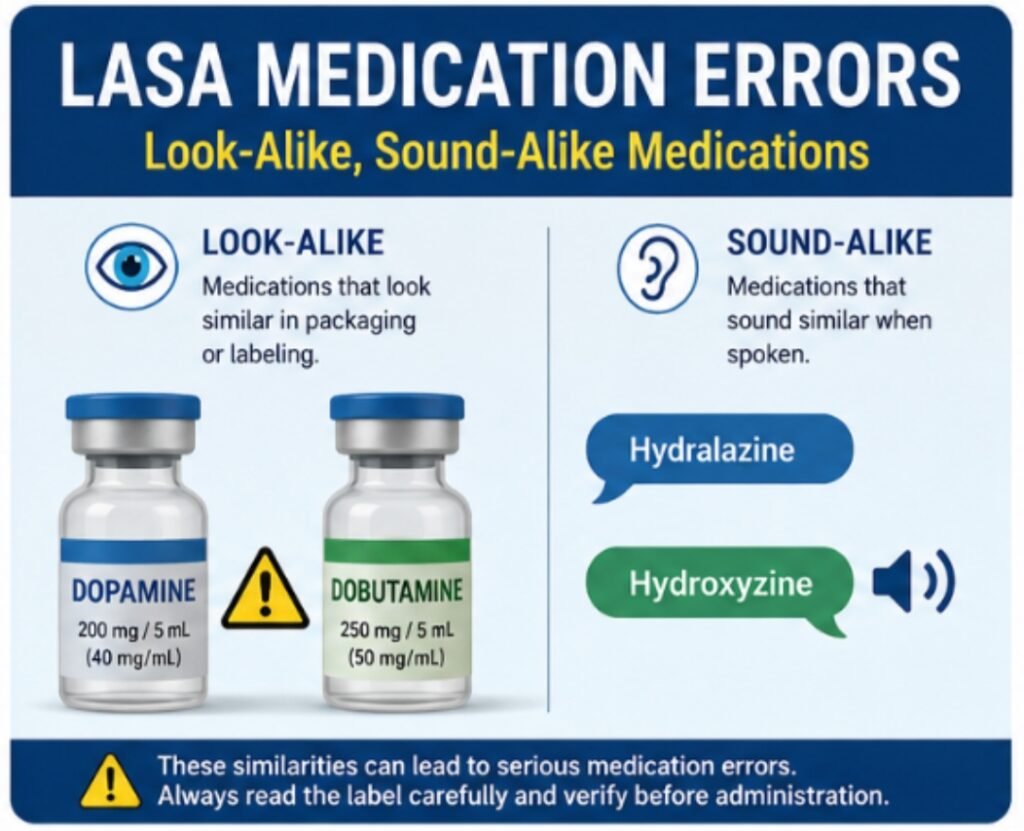
LASA stands for Look-Alike Sound-Alike medications—drugs that look similar in packaging or sound alike when spoken. Even highly experienced nurses can accidentally confuse these medications, especially in fast-paced clinical environments.A small mistake in medication administration can lead to severe complications, prolonged hospital stays, or even life-threatening situations. That is why understanding LASA medication risks and implementing preventive strategies are essential for every healthcare professional.
This practical guide explains everything nurses need to know about LASA medication errors, including causes, examples, prevention strategies, and nursing responsibilities to ensure patient safety.
What Are LASA Medication Errors?
LASA medication errors occur when healthcare professionals confuse medications because their:
Names look similar
Names sound similar
Packaging resembles another drug
Labels are nearly identical
Storage placement is confusing
These errors may happen during:
Prescribing
Transcribing
Dispensing
Medication preparation
Administration
Documentation
LASA errors can occur in hospitals, clinics, nursing homes, emergency units, ICUs, operation theaters, and even home healthcare settings.
Why LASA Medication Errors Are Dangerous
Medication errors can directly affect patient safety and treatment outcomes. Some LASA errors may cause only minor issues, while others can result in:
Allergic reactions
Drug toxicity
Organ damage
Cardiac arrest
Respiratory depression
Hypoglycemia
Seizures
Wrong therapeutic effects
Death
For example, confusing Dopamine with Dobutamine in a critical care patient can seriously affect cardiovascular management.
Common Causes of LASA Medication Errors
Understanding the root causes helps nurses reduce the risk effectively.
1. Similar Drug Names
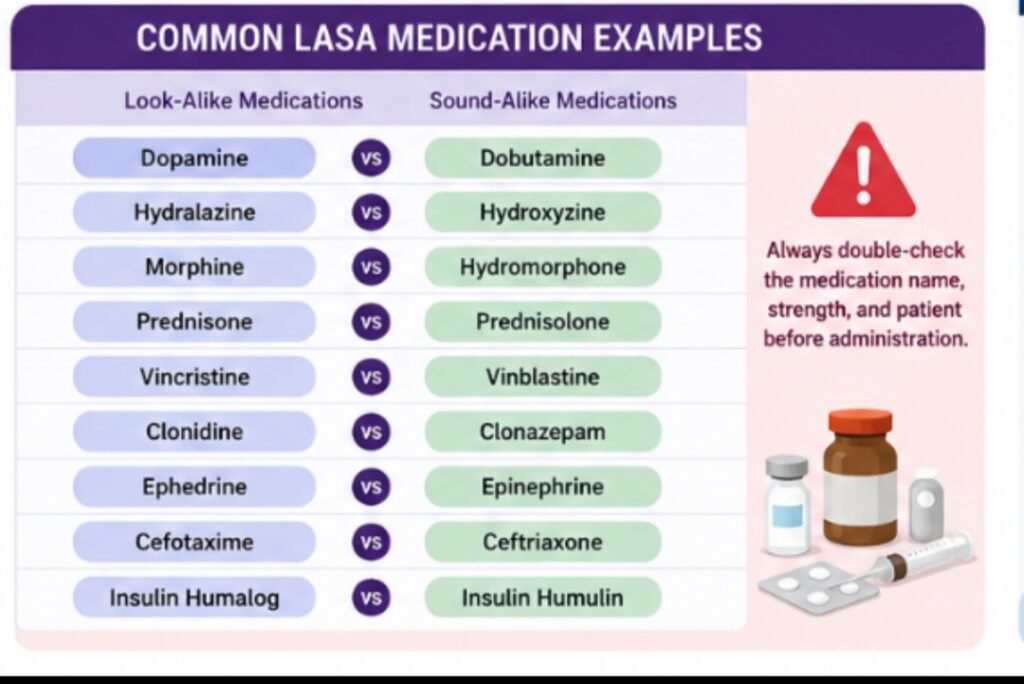
Some medication names sound almost identical when spoken quickly.Examples:
Dopamine vs Dobutamine
Prednisone vs Prednisolone
Hydralazine vs Hydroxyzine
Clonidine vs Klonopin
Noise in hospital wards or unclear verbal communication increases this risk.
2. Similar Packaging and Labeling
Many medications come in similar-sized ampoules, vials, or boxes with matching colors and fonts.This is especially dangerous during:
Night shifts
Emergencies
High workload situations
3. Poor Handwriting
Although electronic prescribing is improving safety, handwritten prescriptions can still create confusion.Illegible writing may cause:
Wrong drug selection
Incorrect dosage
Administration delays
4. Verbal Orders and Miscommunication
Telephone or verbal medication orders are high-risk areas for LASA errors.Poor pronunciation, background noise, or language barriers can contribute to mistakes.
5. Inadequate Staffing and Fatigue
Overworked nurses are more likely to make medication errors due to:
Mental exhaustion
Reduced concentration
StressBurnout
Fatigue significantly affects medication safety.
6. Improper Medication Storage
Storing LASA medications close together increases the chance of selecting the wrong drug.Example:
Keeping insulin vials beside heparin vials can lead to serious errors.
Examples of Common LASA Medications
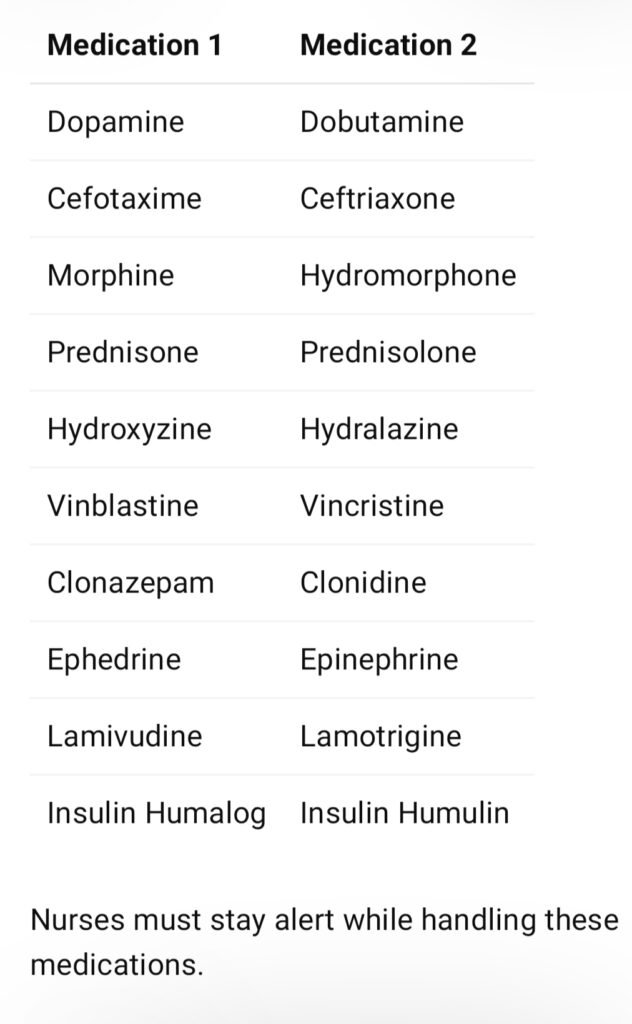
Here are some commonly confused medications in healthcare settings:
High-Risk Areas for LASA Errors
Some hospital units are more vulnerable to LASA medication mistakes.
Intensive Care Units (ICU)
Critical patients often receive multiple high-alert medications.
Emergency Departments
Fast decision-making and emergency interventions increase error risk.
Pediatric Units
Children require weight-based dosing, making accuracy essential.
Operation Theaters
Time-sensitive medication administration can increase confusion.
Oncology Departments
Chemotherapy medications often have similar names and packaging.
Signs That a LASA Medication Error May Have Occurred
Nurses should identify early warning signs, including:
Unexpected patient reactions
Sudden change in vital signs
Lack of therapeutic response
Abnormal laboratory values
Allergic reactions
Sedation or respiratory distress
Unexplained deterioration
Immediate reporting and intervention are essential.
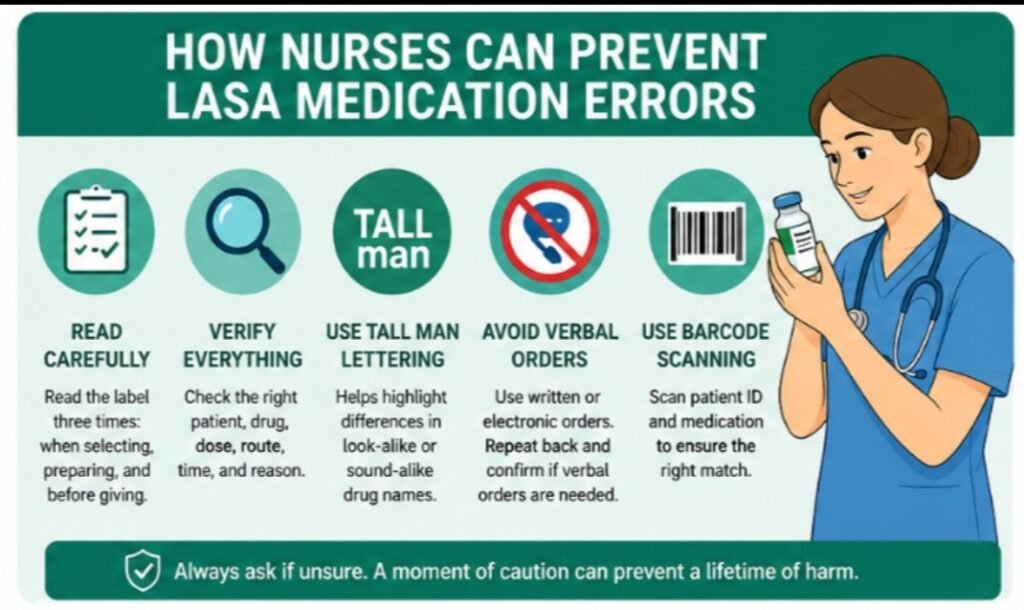
How Nurses Can Prevent LASA Medication Errors
Preventing LASA errors requires attention, teamwork, and standardized safety practices.
1. Follow the “Rights” of Medication Administration
Every nurse should consistently follow medication administration principles:
Right patient
Right medication
Right dose
Right route
Right time
Right documentation
Right reason
Right response
Double-checking all rights reduces medication-related risks significantly.
2. Read Medication Labels Carefully
Never rely on:
Color
Shape
Packaging appearance
Always read:
Drug name
Strength
Expiry date
Route
Dosage instructions
Read labels at least three times:
While selecting medication
During preparation
Before administration
3. Use Tall Man Lettering
Tall Man lettering highlights differences between similar drug names.
Examples:
DOBUTamine vs DOPamine
hydrOXYzine vs hydrALAZINE
This strategy improves visual recognition and reduces confusion.Hospitals should implement Tall Man lettering in:
Medication charts
Pharmacy labels
Electronic systems
Drug storage areas
4. Avoid Verbal Orders Whenever Possible
Encourage written or electronic prescriptions.If verbal orders are necessary:
Repeat the medication name back
Clarify spelling
Confirm dosage and route
Document immediately
Example:
“Doctor, confirming DOBUTamine 5 mcg/kg/min IV infusion?”
5. Use Barcode Medication Administration
(BCMA)Barcode scanning systems improve patient safety by verifying:
Patient identity
Correct medication
Correct dose
BCMA significantly reduces medication administration errors.
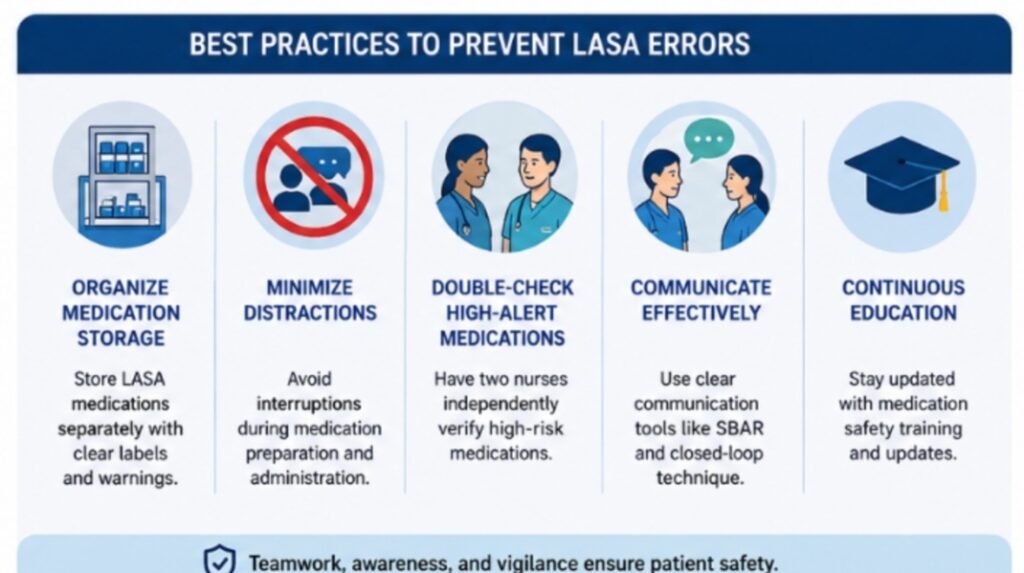
6. Organize Medication Storage Properly
Nurses and pharmacy teams should:
Separate LASA medications
Use warning stickers
Store high-alert drugs separately
Avoid overcrowded medication trays
Proper organization reduces selection errors.
7. Minimize Distractions During Medication Preparation
Interruptions increase medication errors.Hospitals can create:“No interruption” medication zones
Quiet preparation areas
Medication safety protocols
Nurses should avoid multitasking while preparing medications.
8. Double-Check High-Alert Medications
Independent double-checking is essential for:
Insulin
Heparin
Chemotherapy
Vasopressors
Sedatives
Pediatric medicationsTwo nurses should verify:
Drug name
DoseRoute
Pump settings
Patient details
9. Improve Communication Among Healthcare Teams
Clear communication saves lives.Use standardized communication tools like:
SBAR (Situation, Background, Assessment, Recommendation)Closed-loop communicationRead-back techniquesTeam collaboration reduces misunderstandings.
10. Stay Updated Through Medication Safety Training
Continuous education is critical.Nurses should regularly attend:
Medication safety workshops
Clinical competency programs
Drug update sessions
Simulation training
Learning from real-case scenarios improves awareness.
Role of Nurse Leaders in Preventing LASA Errors
Nursing supervisors and educators play a major role in medication safety.
They should:
Conduct medication audits
Promote reporting culture
Organize safety drills
Update LASA medication lists
Encourage non-punitive reporting
A supportive culture improves patient safety outcomes.
Importance of Reporting Medication Errors
Many nurses fear punishment after reporting medication incidents. However, error reporting is essential for system improvement.Reporting helps:
Identify risk patterns
Improve protocols
Prevent future errors
Enhance staff education
Strengthen patient safety systems
Healthcare organizations should promote a blame-free reporting culture.Technology That Helps Reduce LASA Errors
Modern healthcare technology improves medication safety.Electronic Prescribing Systems
Reduce handwriting-related confusion.Smart Infusion Pumps
Prevent incorrect infusion rates.
Clinical Decision Support Systems
Alert healthcare workers about:
Wrong dosages
Drug interactions
Allergy risks
Automated Dispensing Cabinets
Improve medication organization and access control.Patient Education Also Matters
Patients can help prevent medication errors when properly educated.Nurses should teach patients:
Medication names
Purpose of medications
Dosages
Side effects
Allergy reporting
Encouraging patients to ask questions improves safety.
LASA Medication Safety Tips for New Nurses
Newly graduated nurses may feel overwhelmed during medication administration. These simple habits can improve confidence and safety:
Never rush medication preparation
Ask questions if unsure
Use drug references
Verify unclear prescriptions
Seek senior guidance
Practice medication calculations regularly
Develop organized workflows
Patient safety should always come before speed.
Real-Life Clinical Scenario
A nurse in the ICU was preparing an IV infusion for a hypotensive patient. The physician prescribed Dobutamine, but the nurse accidentally selected Dopamine because both ampoules looked nearly identical.Fortunately, during the independent double-check process, another nurse identified the error before administration.
This incident highlights the importance of:
Double-checking
Proper labeling
Team communication
Safe medication systems
Even experienced nurses can make errors without safety barriers.
Best Practices Checklist for Nurses
Here is a quick LASA medication safety checklist:
✅ Verify patient identity carefully
✅ Read labels three times
✅ Use Tall Man lettering
✅ Separate LASA medications
✅ Minimize interruptions
✅ Clarify unclear prescriptions
✅ Use barcode scanning systems
✅ Double-check high-alert medications
✅ Report near-miss incidents
✅ Participate in medication safety training
Creating a Culture of Medication Safety
Preventing LASA medication errors is not only an individual responsibility—it requires teamwork across the healthcare system.
Hospitals should:
Promote patient safety culture
Encourage transparent reporting
Invest in technology
Provide continuous staff education
Standardize medication practices
When nurses, pharmacists, physicians, and administrators work together, medication safety improves significantly.
Future of Medication Safety in Nursing
Healthcare systems worldwide are adopting advanced safety strategies such as:
Artificial intelligence in medication verification
Smart labeling systems
Automated dispensing technologies
Real-time medication monitoring
Digital clinical decision support
However, technology alone cannot replace critical nursing judgment and attention to detail.Nurses will always remain the final safeguard protecting patients from medication harm.
Conclusion
LASA medication errors are preventable when nurses apply safe medication practices consistently. By staying alert, following medication administration protocols, improving communication, and using available technology, nurses can significantly reduce the risk of harmful medication mistakes.Every medication administered represents a patient’s trust in the healthcare system. Even a small moment of careful verification can save a life.Medication safety is not just a routine nursing duty—it is a professional responsibility that directly impacts patient outcomes and quality of care.As healthcare continues to evolve, empowered and knowledgeable nurses will remain the strongest defense against medication errors and patient harm.
Frequently Asked Questions
What does LASA stand for in healthcare?
LASA stands for Look-Alike Sound-Alike medications, which are drugs that resemble each other in name, appearance, or pronunciation.
Why are LASA medication errors common?
They commonly occur because of similar drug names, packaging, poor communication, workload stress, and medication storage issues.
Which healthcare professionals are involved in preventing LASA errors?
Nurses, pharmacists, physicians, administrators, and healthcare organizations all play important roles in medication safety.
What is Tall Man lettering?
Tall Man lettering uses capital letters to highlight differences in similar medication names, such as DOBUTamine and DOPamine.
How can nurses reduce medication administration errors?
Nurses can reduce errors by following medication rights, reading labels carefully, minimizing distractions, double-checking medications, and using barcode systems.