
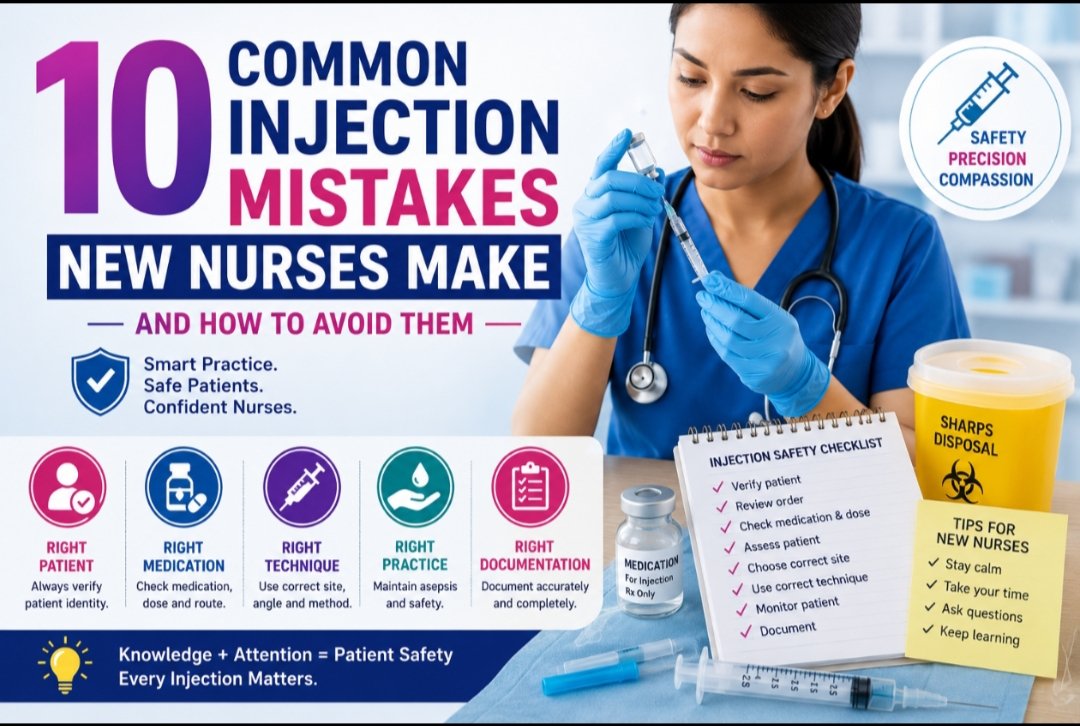
10 Common Injection Mistakes New Nurses Make
Meta Descriptions
New nurses make injection mistakes that are entirely preventable. Learn the 10 most common errors — from wrong site selection to skipped safety checks — and how to avoid them.
Administering injections is one of nursing’s most fundamental skills. Nurses perform them countless times throughout their careers — delivering vaccines, antibiotics, insulin, anticoagulants, and emergency medications. While the technique may seem straightforward, small errors can result in patient discomfort, medication failures, infections, tissue damage, and serious safety incidents.
The transition from classroom to clinical practice amplifies these risks. Anxiety, unfamiliar medications, and workload pressure can all increase the likelihood of mistakes. The reassuring truth is that most injection errors are preventable. Understanding the common pitfalls — and how to avoid them — is the first step toward building confident, safe practice.
Why Injection Safety Matters
Poor injection technique can lead to medication errors, needlestick injuries, infection, tissue necrosis, nerve damage, delayed treatment, patient anxiety, and legal consequences. Every injection demands proper assessment, preparation, technique, and documentation — without exception.
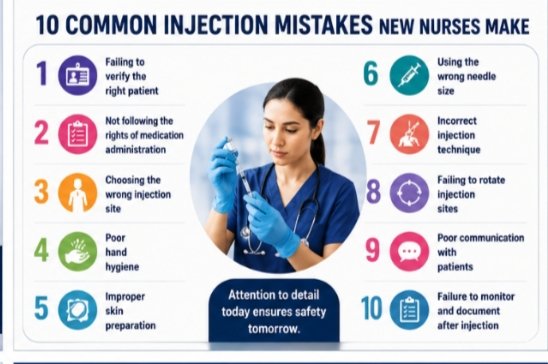
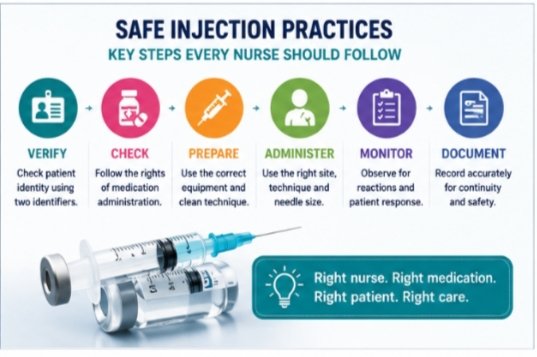
- Failing to Verify the Right Patient
Administering medication to the wrong patient is among the most serious errors in clinical care. It happens more often than it should — driven by similar patient names, heavy workloads, interruptions, and overconfidence.
How to avoid it: Always confirm at least two patient identifiers — full name, hospital ID number. Never rely on room numbers or patient appearance alone. Check the identification band before every injection, every time. - Skipping the Rights of Medication Administration
Injection errors frequently occur when nurses rush through — or skip entirely — the medication safety checks. The traditional five rights (right patient, medication, dose, route, and time) remain foundational. Many facilities now extend these to include the right documentation, assessment, reason, response, and patient education.
How to avoid it: Pause before every injection and verify all applicable rights. No matter how experienced you become, this step should never be skipped. - Choosing the Wrong Injection Site
Different medications require different sites, and selecting the wrong one can impair absorption or cause complications. Common IM sites include the ventrogluteal, vastus lateralis, and deltoid muscles. Subcutaneous injections are typically given in the abdomen, upper arm, or thigh. Intradermal injections are usually placed on the forearm or upper back.
How to avoid it: Review anatomical landmarks regularly and understand site-specific recommendations for the medications you administer. Always assess the intended site before proceeding. - Poor Hand Hygiene
Hand hygiene is one of the most effective infection prevention measures in healthcare — and one of the most commonly overlooked. Inadequate hand hygiene increases the risk of healthcare-associated infections, equipment contamination, and pathogen transmission.
How to avoid it: Wash hands or use alcohol-based hand rub before patient contact, before preparing medications, before injection, and after removing gloves. Gloves are not a substitute for hand hygiene. - Improper Skin Preparation
Failing to clean the injection site adequately can introduce microorganisms directly into tissue. Common errors include skipping antisepsis entirely, not allowing the antiseptic to dry, and touching the site after it has been cleaned.
How to avoid it: Use an approved antiseptic solution per facility protocol. Allow the area to dry fully before inserting the needle. Do not touch the cleaned site. - Using the Wrong Needle Size
Needle selection directly affects both patient comfort and medication delivery. The wrong gauge or length can cause unnecessary pain, prevent the medication from reaching the intended tissue, or damage surrounding structures.
How to avoid it: Factor in the patient’s age, weight, muscle mass, medication viscosity, and intended route when selecting a needle. When uncertain, consult institutional guidelines or ask a more experienced colleague. - Incorrect Injection Technique
Even the right medication, dose, and site can be undermined by poor technique. Common errors include inserting the needle at the wrong angle, poor stabilization, failing to deliver the full dose, or moving the needle during injection.
Standard angles by route:
Intradermal: 5–15 degrees
Subcutaneous: 45–90 degrees
Intramuscular: 90 degrees
How to avoid it: Practice technique in supervised settings and skills labs. Precision improves with repetition — seek feedback early in your career. - Failing to Rotate Injection Sites
Site rotation is particularly important for patients on insulin or other long-term injectable therapies. Repeated injection into the same location can cause lipohypertrophy, scarring, inconsistent medication absorption, and ongoing discomfort.
How to avoid it: Establish and teach patients a rotation schedule. Document injection locations when ongoing therapy is required. Rotation is not optional — it directly affects medication effectiveness. - Poor Communication With Patients
Technical proficiency alone does not constitute safe care. Patients who don’t understand what is happening become anxious, which can affect cooperation and outcomes. Common communication failures include not explaining the procedure, dismissing patient concerns, and relying on clinical jargon.
How to avoid it: Before administering any injection, explain the medication, describe what to expect, and invite questions. Brief, clear communication takes seconds and meaningfully improves the patient experience. - Incomplete Post-Injection Monitoring and Documentation
The injection is not the end of the task. Adequate follow-up includes observing for allergic reactions, injection site complications, adverse effects, and signs that the medication is working as intended.
Documentation should capture the medication name, dose, route, site, time administered, and patient response. Thorough documentation supports continuity of care and provides legal protection for the nurse and the institution.
How to avoid it: Build post-injection assessment into your workflow as a non-negotiable step, not an afterthought.
Additional Safety Principles for New Nurses
Prepare one patient at a time. Preparing multiple patients’ medications simultaneously increases the risk of mix-ups.
Never rush. Speed is not a clinical virtue when patient safety is at stake. Errors made under time pressure can take far longer to resolve than the time saved.
Ask when uncertain. If you are unsure about a dosage, route, compatibility, or technique, ask before proceeding — not after. There are no points lost for seeking clarification.
Stay current. Evidence-based guidelines evolve. Attend skills workshops, complete competency assessments, and seek continuing education opportunities throughout your career.
Recognizing Injection Complications
Even with flawless technique, complications can occur.- Nurses should recognize and respond to:
Local reactions: Redness, swelling, bruising, or pain at the site
Signs of infection: Warmth, pus, fever, or spreading redness
Allergic reactions: Rash, itching, wheezing, or difficulty breathing
Nerve injury: Severe or shooting pain, numbness, or weakness
Early recognition allows prompt intervention and limits patient harm.
A Note on Building Confidence
Every experienced nurse was once where you are now. Confidence develops through supervised practice, mentorship, honest reflection, and the willingness to keep learning. Nervousness is normal; it often signals appropriate caution. What matters is a consistent commitment to patient safety and improvement over time.
Injection administration demands more than technical skill — it requires knowledge, judgment, communication, and attention to detail. The mistakes covered here are common precisely because they are easy to make under real clinical conditions. By understanding them, practicing with care, and never treating any injection as routine, new nurses can protect their patients, protect themselves, and build a clinical practice grounded in genuine competence.
Conclusion
Injection administration is a core nursing skill that requires knowledge, precision, and attention to detail. New nurses often make mistakes such as choosing the wrong site, skipping medication checks, poor hand hygiene, improper technique, inadequate patient communication, and incomplete documentation.
Fortunately, these errors are preventable. By following medication safety principles, maintaining aseptic technique, communicating effectively, and continually developing clinical skills, nurses can provide safe, effective, and compassionate care.
Remember that every injection is more than a procedure—it is an opportunity to protect patient safety, build trust, and demonstrate professional nursing excellence.
Mastering safe injection practices early in your career will help you become a more confident, competent, and successful nurse.
FAQ –
1. What are the most common injection mistakes new nurses make?
The most common mistakes include wrong patient verification, skipped medication checks, incorrect site selection, poor hand hygiene, improper skin preparation, wrong needle size, incorrect injection angle, neglected site rotation, poor patient communication, and incomplete documentation. Most are preventable with careful preparation and consistent practice.
2. What are the rights of medication administration nurses should follow?
The core five rights are: right patient, medication, dose, route, and time. Many facilities extend this to include right documentation, assessment, reason, response, and patient education. Verify all applicable rights before every injection — no exceptions.
3. How do I choose the correct injection site for IM, SC, and ID injections?
IM injections go into the ventrogluteal, vastus lateralis, or deltoid. SC injections are given in the abdomen, upper arm, or thigh. ID injections are typically placed on the forearm or upper back. Always factor in the patient’s age, body composition, and the medication being administered.
4. What needle size should I use for an intramuscular injection?
There is no single universal size. Selection depends on the patient’s age, weight, muscle mass, medication viscosity, and route. Consult your facility’s guidelines and ask a senior colleague if unsure — the wrong size can cause pain or ineffective delivery.
5. How should I prepare the skin before giving an injection?
Clean the site with an approved antiseptic and allow it to dry completely before inserting the needle. Skipping the drying step undermines effective antisepsis. Once cleaned, do not touch the site again before injecting.
6. What is the correct angle for subcutaneous vs. intramuscular injections?
Intradermal: 5–15 degrees. Subcutaneous: 45–90 degrees. Intramuscular: 90 degrees. Using the wrong angle can deposit medication into the wrong tissue layer, reducing effectiveness or causing complications.
7. Why is injection site rotation important for insulin patients?
Repeated injection into the same site causes lipohypertrophy, scarring, and unpredictable medication absorption. A documented rotation schedule maintains tissue integrity and supports consistent insulin delivery.
8. What should I do if a patient has an allergic reaction after an injection?
Stay with the patient and assess severity. Mild reactions include rash or itching; severe anaphylaxis involves wheezing or difficulty breathing. Follow your facility’s emergency protocol, notify the physician, and document the reaction. Be prepared to administer epinephrine if directed.
9. How should I document an injection in a patient’s medical record?
Record the medication name, dose, route, site, date and time, and patient response. Always document after — never before — the injection is given. Accurate documentation supports continuity of care and protects you legally.
10. How can new nurses build confidence in giving injections?
Confidence builds through supervised practice, mentorship, skills lab repetition, and honest reflection. Ask questions, seek feedback, and attend competency assessments. Early nervousness is normal — consistent focus on patient safety is what matters most.