
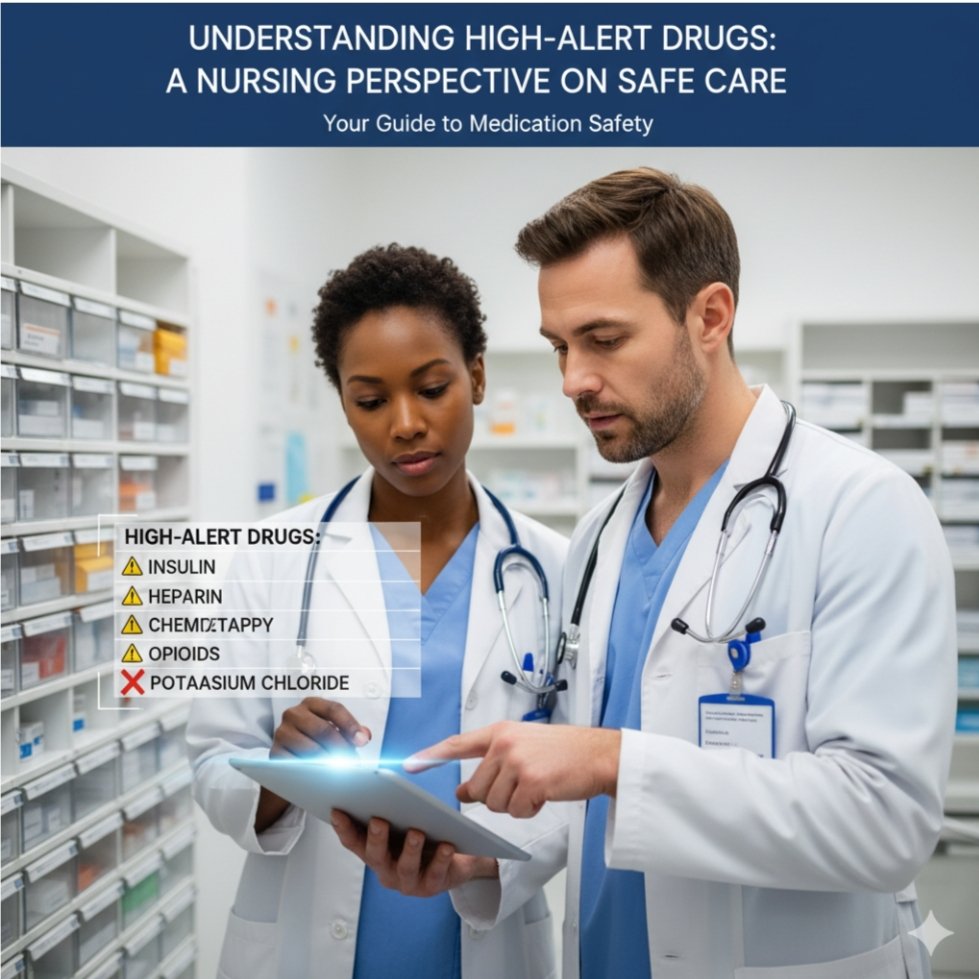
Understanding High-Alert Drugs: A Nursing Perspective on Safe Care
Meta Description
Understanding high-alert drugs is critical for nursing safety. Learn how nurses can handle, administer, and monitor high-risk medications with confidence and care.—
Understanding High-Alert Drugs:
A Nursing Perspective on Safe Care
Introduction –
Why High-Alert Drugs Matter in Nursing
Definition of high-alert medications (ISMP/WHO)Why they carry a higher risk of patient Harm nurses’ frontline role in safe medication administration–
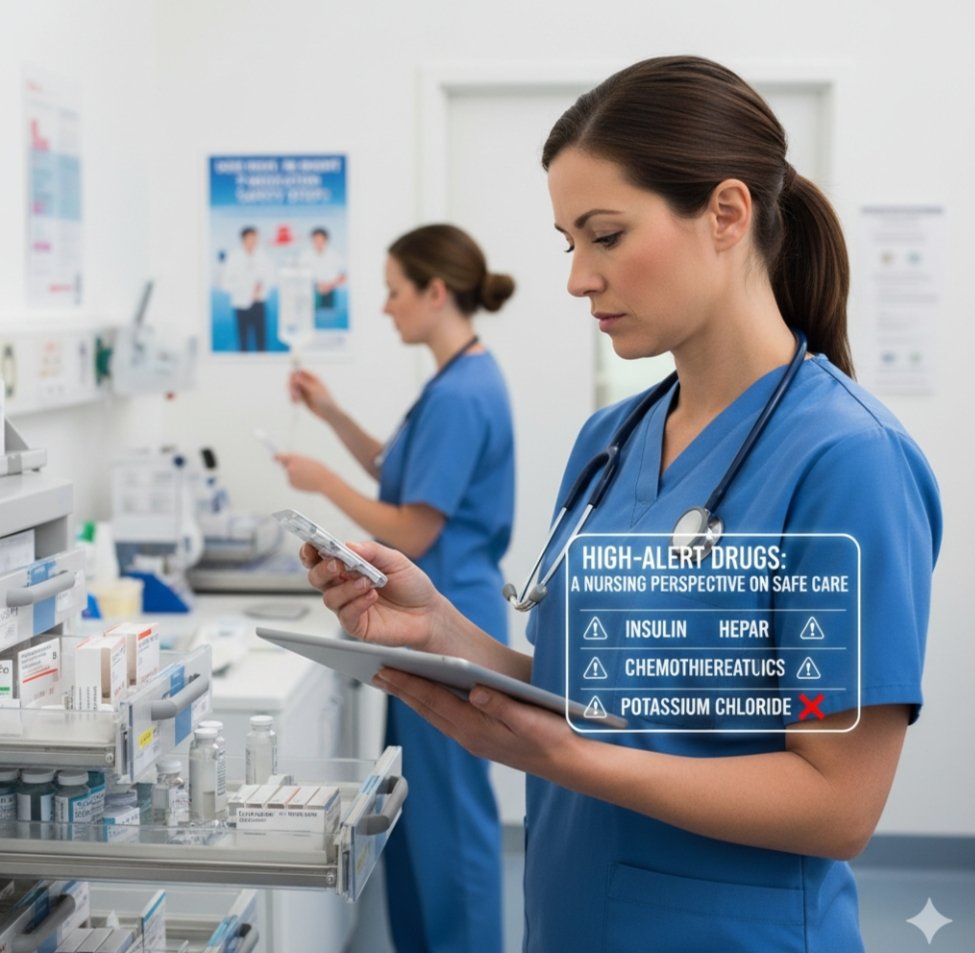
What Are High-Alert Medications?Classification of drugs considered “high-alert”ISMP’s list of common high-alert Drugs examples in different hospital settings (ICU, pediatrics, oncology, etc.)–
1)Common Categories of High-Alert Drugs Every Nurse Should Know
2) Insulin and Antidiabetic AgentsH3: Anticoagulants (Heparin, Warfarin, DOACs)
3) Opioids and Pain Management Medications
4) Chemotherapy Agents
5) Neuromuscular Blocking Agents
6)Concentrated Electrolytes (KCl, NaCl, MgSO₄, etc.)
7)Others (Digoxin, IV Adrenergic Agonists/Antagonists, etc.)
Why Nurses Need Extra Precautions with High-Alert Drugs
Risk of medication errors (wrong dose, wrong patient, wrong route)
Case examples of medication errors in clinical Practice the consequences: patient harm, legal risks, professional accountability

The “Ten Rights” of Medication Administration – Reinforced for High-Alert Drugs
Right patient
Right medication
Right dose
Right route
Right time
right Evaluation
right education
right to refuse
right documentation
right assessment
Expanded safety checks for high-alert medications–
Step-by-Step Nursing Responsibilities with High-Alert Medications Patient assessment before drug Administration double-checking and independent Verification correct Documentation patient monitoring (vital signs, labs, side effects)Communication with healthcare team—
Practical Safety Strategies for Nurses Standardized labeling and storage
Use of tall man lettering for look-alike/sound-alike drugs
High-alert medication “flags” in EHR systems
Independent double-checks with another nurse
Slow IV push pose techniques
when Required safe patient education practices
Simplifying drug information for patients and families
Teaching about side effects and what to report Home safety precautions for patients discharged on high-alert medications

Common Errors with High-Alert Medications – and How to Prevent Them
Wrong concentration of IV Electrolytes insulin sliding scale Miscalculations mislabeling chemotherapy Agents overdose with opioids or benzodiazepines
Prevention strategies & safety nets
– Role of Simulation and Training in High-Alert Medication Safety
Why continuous learning is essential Simulation-based nursing education Real-world practice with high-alert medication scenarios
-Policies and Protocols: What Nurses Should Follow institutional Guidelines national safety standards (e.g., ISMP, WHO, Joint Commission)Importance of compliance
– Quick Reference Table – High-Alert Drugs and Nursing Precautions(A table summarizing drug type, example, nursing precaution, patient monitoring needs)
High-Alert Medications: Nursing Q&A
1. What are the top 5 high-alert medications nurses handle most often?
Answer:The top 5 high-alert medications that nurses frequently handle in hospitals are:
1. Insulin – used to control blood sugar in diabetic patients.
2. Anticoagulants (e.g., Heparin, Warfarin, Enoxaparin) – prevent or treat blood clots.
3. Opioids (e.g., Morphine, Fentanyl, Oxycodone) – used for severe pain management.
4. Chemotherapy drugs (e.g., Methotrexate, Vincristine) – used in cancer treatment.
5. Potassium chloride (IV) – used to correct low potassium levels.🔹 Why high-alert?These drugs have a narrow therapeutic range, meaning small errors in dose or route can cause serious harm or death.
––2. Why is insulin considered a high-alert drug?
Answer:Insulin is a high-alert drug because it directly affects blood glucose levels, and even a small dosing error can lead to:
Hypoglycemia (low blood sugar) – causing confusion, seizures, or coma.
Hyperglycemia (high blood sugar) – leading to diabetic ketoacidosis.Nursing precautions:Always double-check the type and dose (e.g., regular, rapid-acting, or long-acting).Verify meal timing and blood glucose before giving.Use insulin pens or prefilled syringes when possible to reduce errors.
––3. How should nurses monitor patients on anticoagulants?
Answer:Patients receiving anticoagulants (e.g., Heparin, Warfarin, Apixaban) require close monitoring to prevent bleeding complications.Nursing responsibilities include:
✅ Check lab results:INR/PT for WarfarinaPTT for Heparin
✅ Assess for signs of bleeding – gums, urine, stool, injection sites, or bruising.
✅ Teach the patient to avoid:Sharp objectsAspirin or NSAIDs (unless prescribed)Green leafy vegetables in excess (if on Warfarin)
✅ Always double-check doses and infusion rates.-
–4. Can high-alert drugs be given without a double-check?
Answer:❌ No, high-alert drugs must not be given without a double-check.Why?A second nurse verification helps to:Confirm correct drug, dose, route, patient, and time.Catch calculation or transcription errors.Examples requiring double-check:InsulinHeparinIV Potassium chemotherapy Agents opioids (in some facilities)📋 Policy reminder: Always follow hospital protocols for independent double-checking.-
–5. What precautions are needed when giving opioids?
Answer:Opioids are powerful pain relievers but carry high risks of respiratory depression and addiction.Precautions for nurses:Assess pain level, respiration, and sedation before and after giving.Use lowest effective dose for the shortest duration.Monitor oxygen saturation (SpO₂) and respiratory rate (hold if < 12/min).Keep Naloxone (opioid antidote) readily available.Avoid giving additional CNS depressants (e.g., benzodiazepines) unless prescribed.Educate patients to avoid alcohol and report drowsiness or confusion.
—6. How can nurses reduce the risk of medication errors?
Answer:Nurses play a critical role in preventing medication errors by following the “10 Rights” of Medication Administration:1. Right patient
2. Right drug
3. Right dose
4. Right route
5. Right time
6. Right documentation
7. Right reason
8. Right response
9. Right education
10. Right to refuse
Additional strategies:Use barcode scanning and smart infusion pumps.Always clarify unclear orders.Never override safety alerts without confirming.Report near-miss incidents to improve system safety.Maintain continuous medication safety training.
Conclusion – Empowering Nurses for Safer Patient Care summary of key Points reinforcement of nurses’ vital role in medication safety Encouragement for continued learning and vigilance