

What Is MEWS? A Simple Guide to the Modified Early Warning Score for Nurses
Meta Description
What is MEWS? Learn the Modified Early Warning Score explained simply for nurses. Understand how MEWS works, scoring system, actions, benefits, and why it saves lives in hospitals.
Introduction:
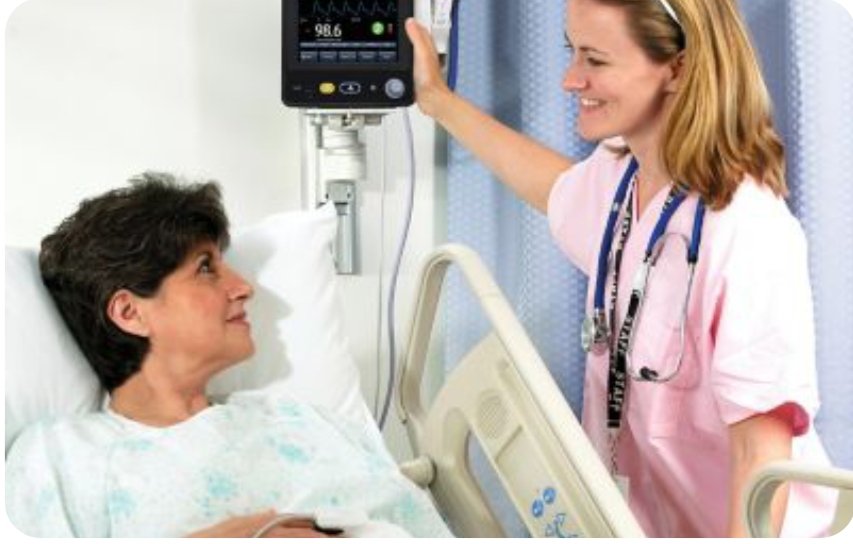
Why Every Nurse Must Understand MEWS In today’s fast-paced hospital environment, patients can deteriorate rapidly—sometimes within hours. Many serious adverse events such as cardiac arrest, sepsis, respiratory failure, or unplanned ICU admission are preceded by subtle but detectable changes in vital signs.
This is where MEWS – Modified Early Warning Score plays a crucial role.MEWS is not just a number on a chart. It is a patient safety tool, a communication bridge, and a clinical decision support system that empowers nurses to recognize deterioration early and act before a crisis occurs.This is comprehensive guide is designed especially for staff nurses, nursing students, nurse educators, and healthcare teams who want a clear, practical understanding of MEWS.
—What Is MEWS? (Modified Early Warning Score Explained)
MEWS (Modified Early Warning Score) is a bedside clinical scoring system used to identify patients at risk of clinical deterioration by analyzing routine vital signs and level of consciousness.Instead of relying only on subjective judgment, MEWS converts vital sign abnormalities into a numerical score that helps healthcare professionals:
Detect early deterioration
Prioritize patient care
Escalate treatment appropriately
Prevent emergencies In simple words:> MEWS is an early alarm system that tells nurses when a patient’s condition is becoming unsafe.

—Why Was MEWS Developed?
Research has shown that:Most in-hospital cardiac arrests are not sudden Abnormal vital signs appear 6–24 hours before collapse
Delayed recognition leads to poor outcomes
Before MEWS, warning signs were often:
MissedIgnored
Poorly communicated
MEWS was developed to:
Standardize patient assessment
Support nurses’ clinical judgment
Improve communication with doctors
Reduce preventable deaths
—Who Uses MEWS in Healthcare Settings?MEWS is a multidisciplinary tool, but nurses are its backbone.
1. Staff Nurses Measure vital signs Calculate MEWS Monitor trends Escalate care based on score
2. Doctors Review MEWS trends Decide investigations and treatment Determine need for ICU or senior review
3. Rapid Response Teams (RRT)Respond to high MEWS scores Provide immediate advanced care
4. Nursing Supervisors & Administrators Monitor ward safety Reduce adverse events Improve quality indicators—Core Parameters Included in MEWS
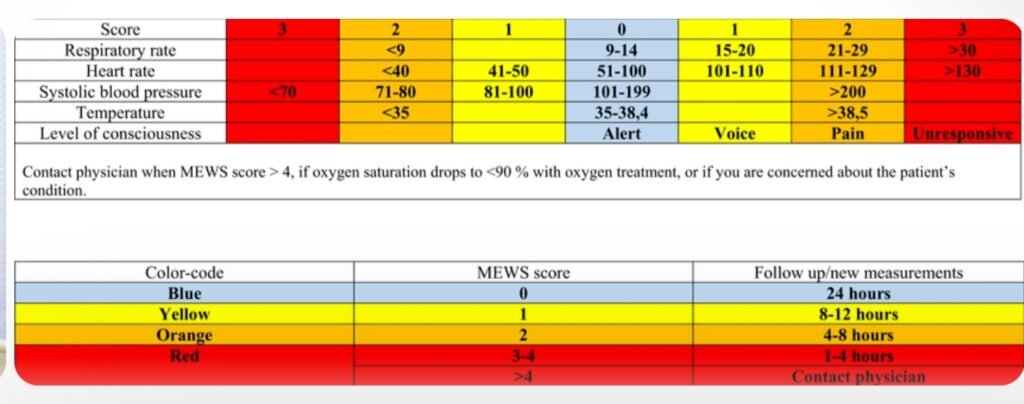
MEWS is based on five key clinical parameters, all of which nurses assess daily.
—1. Respiratory Rate (RR)
Most sensitive indicator of deterioration Often the first parameter to change High RR suggests respiratory distress, sepsis, or metabolic acidosis
Why it matters:Changes in breathing usually occur before oxygen saturation drops.
—2. Heart Rate (Pulse)
Reflects cardiovascular response Tachycardia may indicate pain, infection, hypovolemia, or shock Bradycardia may suggest conduction problems or neurological issues
––3. Systolic Blood Pressure
Indicates tissue perfusion Low BP is a late but serious sign Sudden drops require immediate attention
—4. Body Temperature
Fever may indicate infection or sepsis Hypothermia is a red flag for severe illness or shock
—5. Level of Consciousness (AVPU Scale)
A – Alert
V – Responds to Voice
P – Responds to Pain
U – Unresponsive
Even a slight change in mental status is clinically significant.
—How MEWS Works: Step-by-Step for Nurses
Step 1: Accurate Vital Sign Measurement Accurate assessment is critical. Wrong readings lead to wrong scores.
Step 2: Assign Individual Scores Each parameter is scored from 0 to 3, depending on how abnormal it is.
Step 3: Calculate Total MEWS Add all parameter scores to get the final MEWS score.
Step 4: Take ActionThe score determines monitoring frequency, escalation, and intervention.
—Understanding MEWS Score Interpretation MEWS Score Clinical Meaning Required Action
0–1 Stable Routine monitoring
2–3 Early warning Increased observation
4–5 High risk Doctor review
≥6 Critical Rapid response / ICU>.
—Clinical Actions Based on MEWS Score
Low MEWS (0–1)-Continue routine care Regular vital sign monitoring
Moderate MEWS (2–3)-Increase frequency of observations Inform senior nurse Prepare for medical review
High MEWS (4–5)-Immediate doctor assessment Blood tests, imaging, oxygen, IV fluidsClose monitoring
Critical MEWS (≥6)-Activate Rapid Response Team Possible ICU transfer Emergency management

—Why MEWS Is So Important for Nurses MEWS:
Strengthens clinical confidence Supports
early escalation Improves nurse–doctor communication
Protects nurses legally through documentation
Saves patient lives
🩺 MEWS gives nurses a strong, objective voice at the bedside.
—MEWS vs Clinical Judgment: Which Is Better?This is not an “either-or” situation.
MEWS provides objective data Clinical judgment provides context Best practice combines:> MEWS + Nurse’s Assessment + Patient History
—MEWS in Special Patient Populations
Elderly Patients May deteriorate without fever
Mental status change is crucial
Postoperative PatientsvPain, bleeding, infection reflected in MEWS Medical-Surgical WardsHigh utility for early detection of sepsis
—MEWS and Patient Safety Culture Hospitals using MEWS effectively report:
Fewer cardiac arrests
Reduced ICU admissions
Improved teamwork
Better patient outcomes
MEWS encourages a proactive rather than reactive approach to care.
—Limitations of MEWS (Important to Understand)MEWS should not be used blindly.Limitations include:
Not disease-specific Depends on accurate measurement May miss subtle deterioration Cannot replace full assessment
📌 Always assess the whole patient.—MEWS in Modern Healthcare Systems Many hospitals now use:
Electronic MEWS (e-MEWS)
Automated EMR alerts
MEWS combined with NEWS2Despite technology, nurses remain the key decision-makers.
—MEWS Explained Simply for Nursing Students> MEWS is like a traffic signal for patient safety.Green means safe, yellow means caution, red means emergency.Learning MEWS early builds strong clinical judgment.
—Practical Tips for Nurses Using MEWS Always measure respiratory rate manually Watch trends, not single readings Escalate early
—never wait Document actions clearly Trust your instincts alongside the score
—Conclusion:
MEWS Saves Lives When Nurses Use It Well MEWS is one of the most powerful tools in nursing practice. When used correctly, it allows nurses to identify danger early, communicate clearly, and act decisively.In modern healthcare, MEWS is not optional—it is essential.
Frequently Asked Questions (FAQs) About MEWS
––1. What does MEWS stand for in nursing?
MEWS stands for Modified Early Warning Score. It is a clinical scoring system used by nurses and healthcare staff to identify early signs of patient deterioration using vital signs and level of consciousness.
—2. Why is MEWS important for nurses?
MEWS helps nurses detect patient deterioration early, escalate care on time, and prevent emergencies such as cardiac arrest or ICU admission. It also strengthens nurse–doctor communication and supports patient safety.
—3. Which vital signs are included in MEWS?
MEWS includes:Respiratory rateHeart rate (pulse)Systolic blood pressureBody temperatureLevel of consciousness (AVPU)These parameters give an early picture of a patient’s clinical condition.
—4. What is a normal MEWS score?
A MEWS score of 0–1 is considered normal and indicates a stable patient. Higher scores indicate increasing risk and require closer monitoring or urgent medical review.
—-5. What MEWS score is considered dangerous?
A MEWS score of 4 or more is concerning and requires immediate medical review. A score of 6 or above is critical and usually triggers a rapid response or emergency team.
—6. How often should MEWS be calculated?
MEWS should be calculated:At admissionDuring every vital sign assessmentAfter any change in patient conditionAs per hospital policy (usually every 4–6 hours or more frequently if unstable)
––7. Can MEWS replace clinical judgment?
No. MEWS supports clinical decision-making but does not replace nursing judgment. Nurses should always assess the whole patient and escalate care if concerned—even if the MEWS score is low.
––8. What should a nurse do if the MEWS score increases?
If MEWS increases, the nurse should:Reassess vital signs Inform the senior nurse or doctor Increase monitoring frequency Follow the hospital escalation protocolDocument actions taken
––9. Is MEWS used in all hospital wards?
MEWS is commonly used in:Medical and surgical wards Emergency departments Postoperative units Step-down unitsIt may not be suitable for ICU patients, as they require advanced scoring systems.
—10. What is the difference between MEWS and NEWS2?
MEWS is an older scoring system, while NEWS2 (National Early Warning Score 2) is a more advanced version used widely in some countries. NEWS2 includes oxygen saturation and supplemental oxygen use, making it more detailed.
—11. Why is respiratory rate so important in MEWS?
Respiratory rate is often the earliest indicator of deterioration. Changes in breathing can signal sepsis, respiratory failure, or metabolic problems before other vital signs change.
—12. Can MEWS help prevent cardiac arrest in hospitals?
Yes. Studies show that early warning scores like MEWS can identify deterioration hours before cardiac arrest, allowing timely intervention and reducing preventable in-hospital emergencies.
—13. Is MEWS useful for nursing students?
Absolutely. Learning MEWS helps nursing students:Develop early clinical judgmentUnderstand patient deteriorationImprove patient safety awarenessGain confidence in bedside assessments
—-14. What are the limitations of MEWS?
MEWS limitations include:Not disease-specificDependent on accurate vital sign measurementMay miss subtle deteriorationShould not be used alone without assessment
—15. Is MEWS documented in electronic medical records?
Many hospitals use electronic MEWS (e-MEWS) integrated into EMR systems, which automatically calculate scores and alert staff when thresholds are crossed.
—16. When should a rapid response team be activated based on MEWS?
A rapid response team is usually activated when:MEWS score is 6 or higherThere is sudden deteriorationThe nurse has serious concern, regardless of score-
—17. Can MEWS be used in elderly patients?
Yes, but nurses must be cautious. Elderly patients may deteriorate without obvious fever or high heart rate, so mental status changes are especially important.
—18. How does MEWS improve patient safety?
MEWS improves patient safety by:Standardizing assessmentsEncouraging early escalationReducing communication gapsPreventing delayed interventions
—19. Is MEWS mandatory in hospitals?
MEWS use depends on hospital policy and national guidelines. Many hospitals mandate early warning scores as part of patient safety and accreditation standards.
—20. What is the key takeaway for nurses using MEWS?
MEWS is a tool, not a replacement for care. When combined with nursing assessment and timely action, it becomes a powerful life-saving system.