

What Is the Difference Between Central TPN and Peripheral TPN? A Complete Guide for Nurse
🩺 Introduction
Total Parenteral Nutrition (TPN) is a lifesaving therapy used when a patient cannot receive adequate nutrition through the gastrointestinal (GI) tract. TPN delivers essential nutrients—glucose, amino acids, lipids, vitamins, and electrolytes—directly into the bloodstream.
For nurses, one of the most important questions is:👉 Should this patient receive TPN through a central line or a peripheral line?
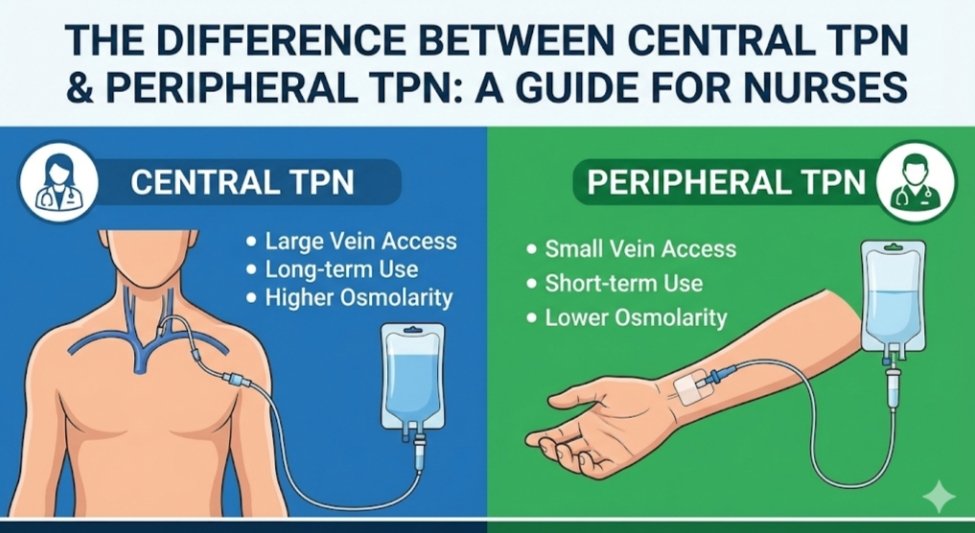
This article breaks down the difference between Central TPN and Peripheral TPN, making it simple, clear, and clinically relevant to your daily nursing practice.
—🔍 What Is TPN?
Total Parenteral Nutrition is a specialized IV infusion used when the digestive system is non-functioning or when the patient cannot meet nutritional needs orally or enterally.TPN bypasses the GI tract completely and provides:Dextrose (energy)Amino acids (protein)Lipids (fat)ElectrolytesVitaminsTrace elementsFluidsBut route of administration decides how much nutrition the patient can safely receive. That route may be either central or peripheral.
—⭐ Central TPN: What Nurses Need to Know
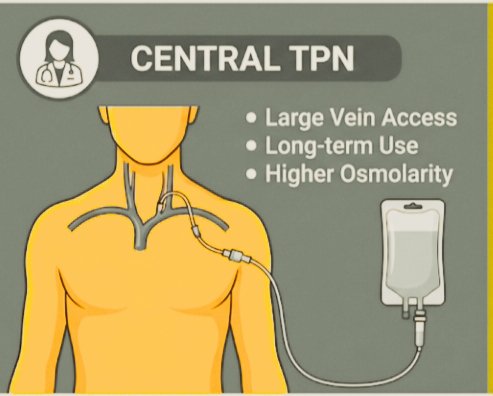
1. What Is Central TPN?
Central TPN is infused through a central venous catheter (CVC), such as:
Internal Jugular (IJ)
Subclavian vein
PICC line (tip in SVC)
Femoral line (less preferred)
The catheter tip lies in the superior vena cava (SVC), where blood flow is very high. This allows concentrated nutrients to be infused safely.
—2. Osmolality of Central TPN
👉 Can tolerate high osmolar solutions (> 900 mOsm/L)
This means you can give:Dextrose 20–70%High-protein amino Acids hypertonic electrolyte Solution because of the central location, the blood flow dilutes the solution quickly, preventing irritation.
—3. Indications for Central TPN
Central TPN is used when the patient needs:Long-term nutritional support (weeks to months)
High caloric and protein intake
Severe malnutrition
Nonfunctional GI tract
High metabolic demand (trauma, burns, sepsis, cancer)
Postoperative nutrition after major GI surgery
––4. Advantages of Central TPN
Meets full nutritional Requirements
safe for long-term use
Allows high-calorie, high-concentration solutions
Less risk of phlebitis-
–5. Disadvantages of Central TPN
Higher risk of CLABSI (central line-associated bloodstream infection)Insertion risks: pneumothorax,
bleeding,
air Embolism requires trained personnel and strict Protocols more expensive
—6. Nursing Responsibilities for Central TPN Nurses play a critical role in preventing complications.Nursing Care Checklist
✔ Maintain strict aseptic technique
✔ Monitor blood glucose every 4–6 hours
✔ Never stop TPN abruptly (risk of severe hypoglycemia)
✔ Inspect the insertion site for redness, swelling, or discharge
✔ Use a dedicated TPN lumen
✔ Change tubing and filter every 24 hours
✔ Confirm catheter tip placement via X-ray before starting infusion
✔ Document intake/output, weight, labs (CBC, electrolytes, liver enzymes)
—⭐ Peripheral TPN: What Nurses Need to Know
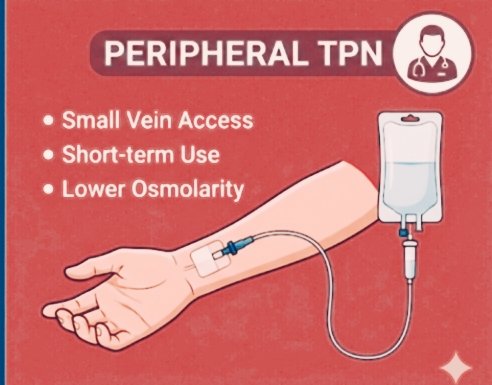
1. What Is Peripheral TPN (PPN)?
Peripheral TPN is infused through:Hand Veins forearm Veins midline catheters
PPN solutions must be more dilute because peripheral veins are smaller and easily irritated.
—2. Osmolality of Peripheral TPN
👉 Should be < 900 mOsm/L to avoid vein irritation.
Solutions are:Lower in Dextrose lower in amino Acids lower in electrolytesThis limits the total calories the patient receives.
—3. Indications for Peripheral TPN PPN is used only for short-term nutritional support such as:
Mild to moderate malnutrition
Temporarily unable to eat
after surgeryAwaiting
central line Placement patients needing supplemental calories (not full requirements)
—-4. Advantages of Peripheral TPN
Easier to Insert lower risk of severe infections
No complications like pneumothorax
Less expensive
—5. Disadvantages of Peripheral TPN
Cannot meet full nutritional needs
High risk of phlebitis due to osmolarity
Requires frequent IV site changes (every 48–72 hours)
Not suitable for long-term therapy
—6. Nursing Responsibilities for Peripheral TPN
✔ Assess IV site every 1–2 hours
✔ Monitor for phlebitis, infiltration, or extravasation
✔ Ensure the line is patent
✔ Avoid abrupt discontinuation
✔ Use infusion pumps for accurate delivery
✔ Report any burning, redness, or swelling immediately
✔ Check electrolytes, glucose, and daily labs
⭐ Complications of TPN Every Nurse Must Watch ForMetabolic Complications
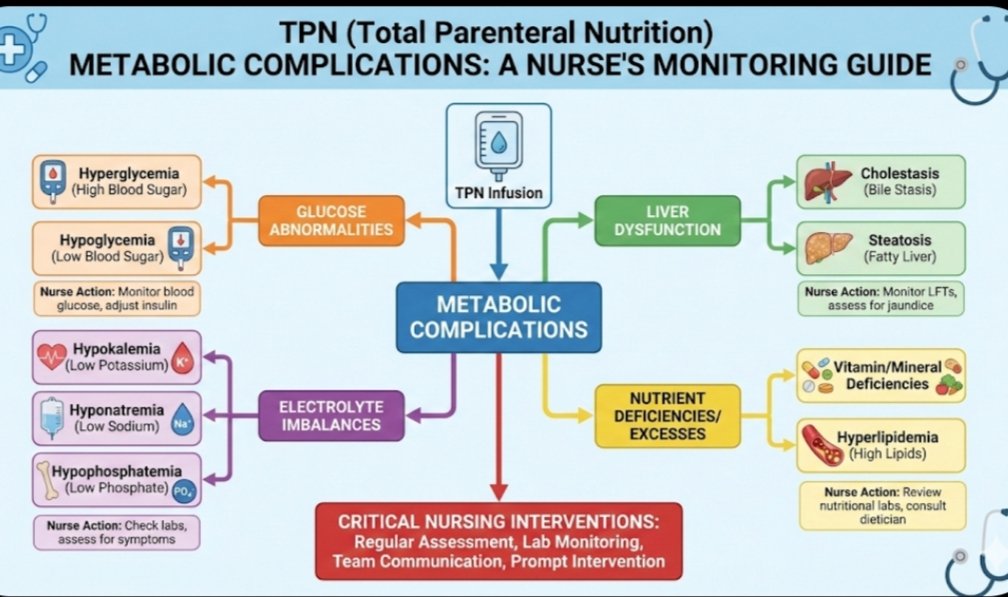
Hyperglycemia
Hypoglycemia (if TPN stops abruptly)
Electrolyte imbalances
Liver dysfunction
Catheter-Related Complications
Phlebitis (PPN)CLABSI (CPN)
Air embolism
Thrombosis
Fluid Complications
fluid overload
Pulmonary edema
—⭐ Conclusion
Understanding the difference between Central TPN and Peripheral TPN is essential for safe and effective nursing care.While Central TPN supports long-term, concentrated nutrition, Peripheral TPN is limited to short-term, low-calorie support.As nurses, your knowledge, vigilance, and monitoring play a major role in preventing complications, ensuring patient safety, and improving nutritional outcomes.
❓ Frequently Asked Questions (FAQ)
1. What is the main difference between Central TPN and Peripheral TPN?
The main difference is the type of vein used. Central TPN is given through a central vein (like internal jugular or PICC line) and allows highly concentrated nutrition, while Peripheral TPN is given through small peripheral veins and uses diluted solutions.
––2. When should Central TPN be used?
Central TPN is used when the patient needs long-term nutrition, high calories, or has a non-functioning gastrointestinal tract.
—3. When is Peripheral TPN preferred?
Peripheral TPN is preferred for short-term nutrition when only mild to moderate nutritional support is needed.
—4. Why can’t concentrated TPN be given through peripheral veins?
Peripheral veins are small and sensitive. Concentrated solutions can cause vein irritation, phlebitis, and tissue damage.
—5. Is Peripheral TPN safer than Central TPN?
Peripheral TPN has fewer serious complications, but it cannot provide full nutrition. Central TPN is more effective for long-term care but has higher infection risks.
—6. Can TPN be stopped suddenly?
No. TPN should not be stopped abruptly because it can cause sudden hypoglycemia (low blood sugar).
—7. What are the common complications of Central TPN?
Common complications include bloodstream infections, air embolism, thrombosis, and catheter-related problems.
—8. What are the nursing responsibilities for TPN care?
Nurses must monitor blood glucose, maintain sterile technique, inspect the IV site, and ensure accurate infusion using a pump.
––9. How long can a patient stay on Central TPN?
A patient can stay on Central TPN for weeks to months, depending on medical condition and nutritional needs.
—10. Is TPN better than tube feeding?
TPN is used only when enteral (tube) feeding is not possible or contraindicated because the GI tract must be bypassed